Showing posts with label painting. Show all posts
Showing posts with label painting. Show all posts


Cot - The Storm (1880)
>> –
painting,
pierre-auguste cot
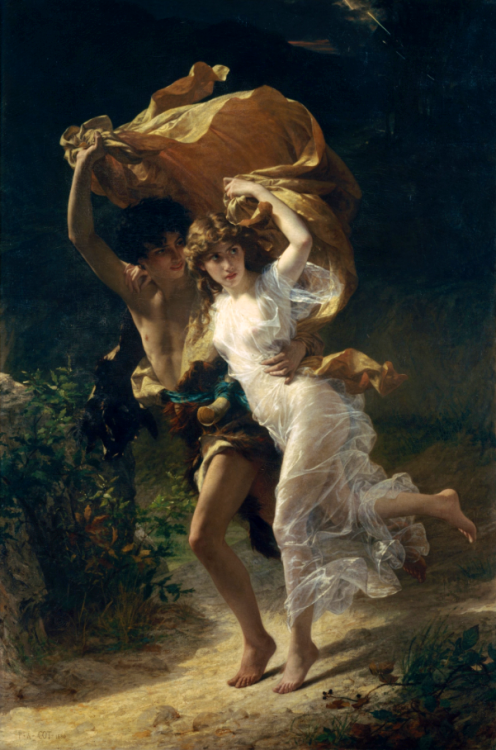
Pierre-Auguste Cot (1837-1883)
“The Storm” (1880)
Oil on canvas
Metropolitan Museum of Art, New York City, New York, United States
Cot was born in Bédarieux, Hérault, and initially studied at l'Ecole des Beaux-Arts in Toulouse before going to Paris. He studied under Leon Cogniet, Alexandre Cabanel and William-Adolphe Bouguereau. In 1863 he made a successful debut at the Salon, and from the 1870s, his popularity grew quickly.
Cot enjoyed the patronage of the academic sculptor Francisque Duret, whose daughter he married, and of Bouguereau, with whom he had also worked. Bouguereau painted a portrait of Cot's daughter, Gabrielle. Bouguereau had dined with the Cot family to celebrate Gabrielle's marriage to an architect named Zilin. The artist made a gift of the painting to the wife of Duret, Gabrielle's grandmother.[1]
Cot won various prizes and medals, and in 1874 was made Chevalier of the Legion of Honour.
He died in Paris at the age of 46. He is buried at the Père Lachaise Cemetery (source)
The painting is reminiscent of an earlier work, Spring, which was completed by Cot in 1870. It was subsequently acquired by John Wolfe after it was displayed with astounding success at the Salon of 1873. It is believed that the presence of Spring in Wolfe's collection was the impetus that drove his cousin, Catharine Lorillard Wolfe, to purchase it in 1880. Both are of roughly the same dimensions and are evidently related in a subject in the sense that both portray a young, nubile couple. It is from this therefore, that both are thought to form a symbiotic pair, where the success of the earlier work led to the creation of the latter. (source)Read more...
John Atkinson Grimshaw complete works


John Atkinson Grimshaw (1836 - 1893) was a Victorian-era painter, notable for his landscapes, usually known as Atkinson Grimshaw.Read more...
He was born 6 September 1836 in Leeds. In 1856 he married his cousin Frances Hubbard (1835-1917). He died 13 October 1893, and is buried in Woodhouse cemetery, Leeds.
In 1861, at the age of 24, to the dismay of his parents, he departed from his first job as a clerk for the Great Northern Railway to pursue a career in art. He began exhibiting in 1862, under the patronage of the Leeds Philosophical and Literary Society, with paintings mainly of dead birds, fruit and blossom. He became particularly successful in the 1870s and was able to afford to rent a second home in Scarborough, which also became a favourite subject. (From Wikipedia)


Just reading
>> –
fine art,
painting,
photo,
photography,
portrait,
visual art,
world
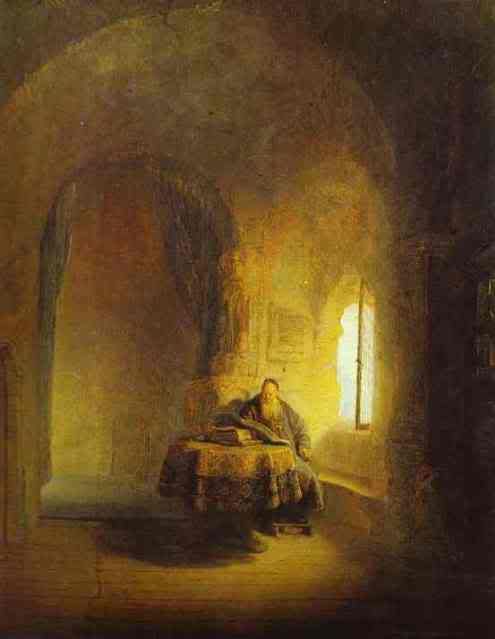
Rembrandt, Philosopher Reading (1631)
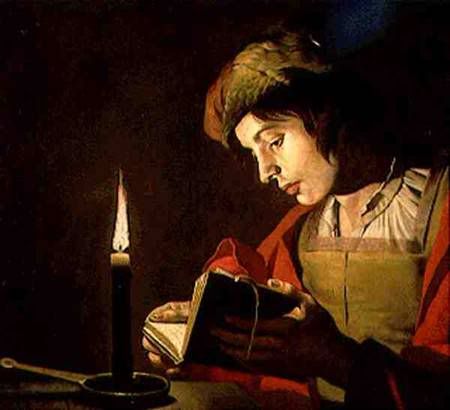
Young Man Reading by Candle Light (oil on canvas) by Stomer, (Stom) Matthias (c.1600-p.1650)

Olga Lysenko
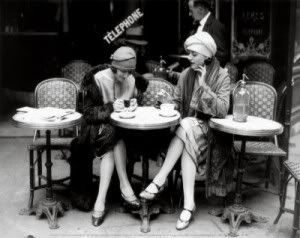
Women sitting at a cafe (author?)
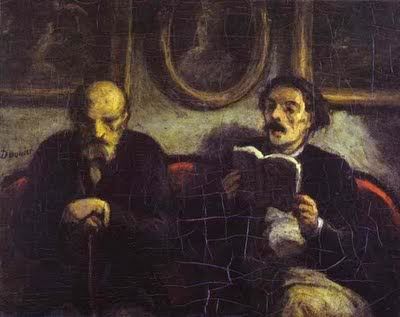
Honoré Daumier (reading of a poem)1857/58
Read more...


The World according Copernicus
>> –
drawing,
history,
literature,
model,
original edition,
painting
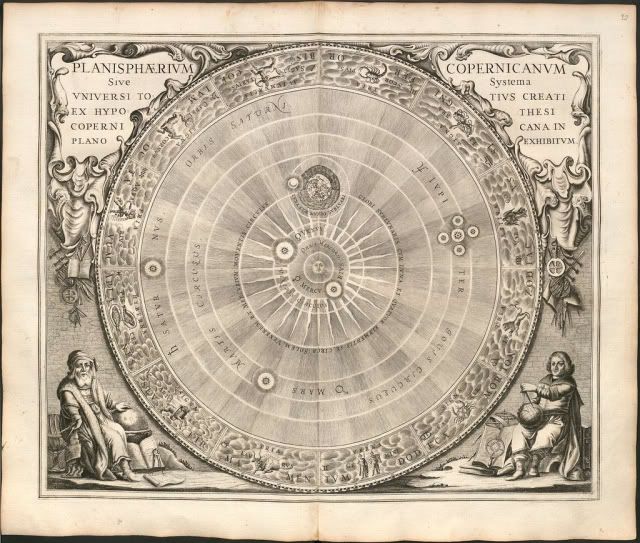
Johannes Janssonius - Planisphaerium Copernicanum Sive Systema Universi Totius Creati Ex Hypothesi Copernicana In Plano Exhibitum 1660 [source: BibliOdyssey]
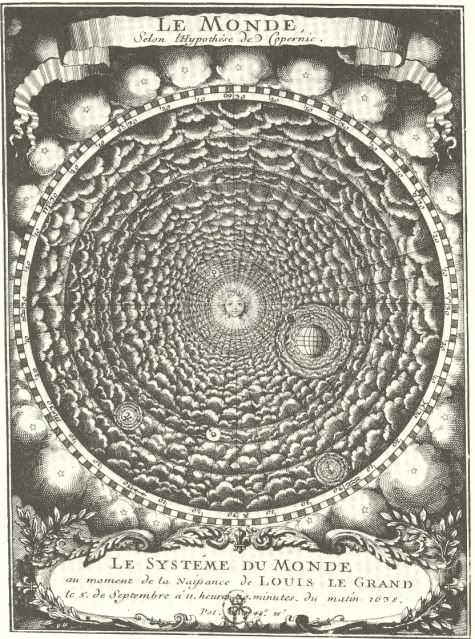
Le Monde Selon l’Hypthese de Copernic. Le Systeme du Mondeau movement de la Naissance de Louis le Grand le 5 de Septembre 11. heures 20 minutes du matin 1638 [BibliOdyssey, Ptak Science Books]
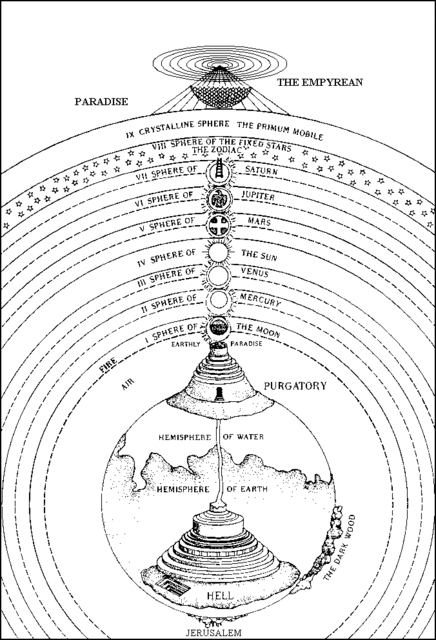
Dante´s Cosmos
>> –
history,
literature,
original edition,
painting
Stradanus (Giovanni Stradano). Map of the whole hell (1587?)
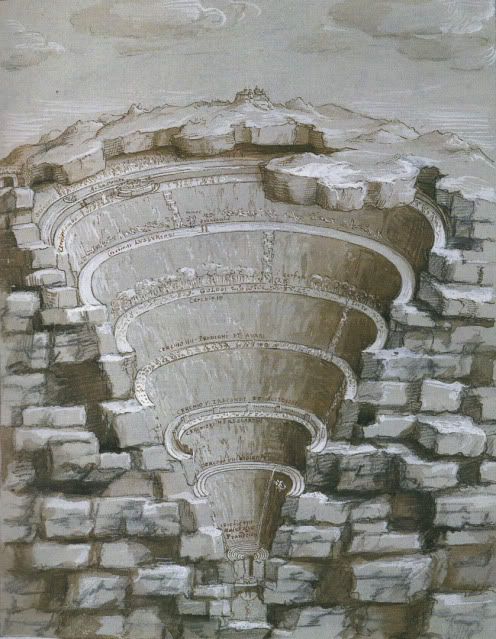
Michelangelo Cactani. La Materia della Divina Commedia di Dante Aligherie (1855) [source]
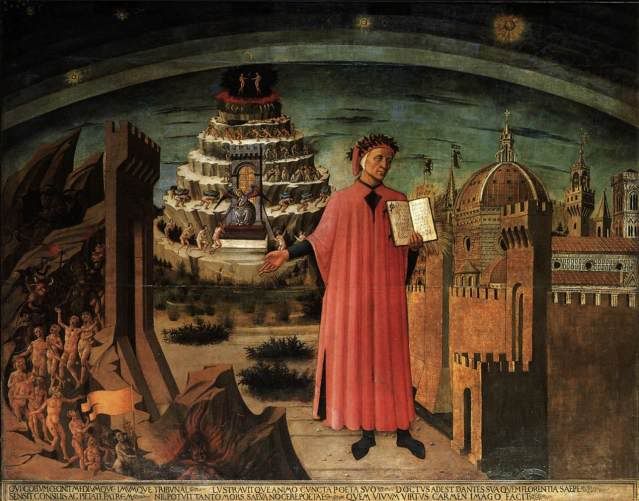
Domenico di Michelino. Dante and the Three Kingdoms (1465)
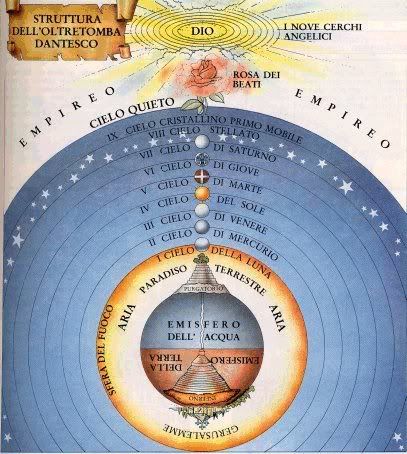
?
Worlds of Goya
Francisco de Goya y Lucientes (1746-L828) was one of the most influential figures in Spanish art. He was also extremely important in the development of modern aesthetic sensibility, a forerunner of Romanticism, both in the content of his paintings, with their in-depth exploration of reality and references to the dream world, and in his very original technique.

Cristo crucificado (more here)
His work embodies his personal imaginative visions, defying traditional academicism and conventional subjects. Goya described himself as a pupil of Velazquez, Rembrandt, and nature: from Velazquez, he acquired a feeling for softly shaded colour, applied in layers: from Rembrandt, his predilection for dark and mysterious background settings; and from nature, he took an endless variety of forms, some beautiful, some not. [source]

La maja desnuda

La maja vestida

'Francisco Goya y Lucientes, Pintor' (Caprichos)

"El sueño de la razón produce monstruos" (Caprichos)
Goya was a keen observer of contemporary society and recorded the sense of unease caused by Spain's moral and political crisis in the closing years of the 18th century: he also portrayed with dexterity the picturesque quality and gaiety of the life of Madrid's majas; the religious life of the people and the enthusiasm for progress and technology. [source]


"Modo de Volar" (Disparates)
Goya was liberal minded, a man of the Enlightenment, and his social circle was made Lip of progressive intellectuals. He turned his attention to the world of the dispossessed — in The Wounded Mason and Winter (1786-87). for example -and later to the mysterious world of sorcery and witchcraft, which was already popular among writers of the time. lie also strongly and graphically denounced injustice and cruelty, and the false morality and bigotry of religious hypocrites. In his Los Caprichos series (l797-99). Goya highlighted the evils of ignorance and superstition, attempting to exorcise them with his mercilessly lucid portrayals.
As chief Court painter, he painted superb portraits of the Spanish nobility and royalty, often influenced by Velazquez; echoes of the famous Las Meninas are evident in The Family of Charles IV. Using extraordinarily skilful pictorial effects, he accurately portrayed the Rococo opulence of furnishings and fashions, the aristocratic assurance of his subjects' poses, while subtly recording the pettiness and vanity of a corrupt and complacent ruling class. The French invasion, the subsequent popular uprising, the horrors of war. and disillusion at the realization that the supposed liberators were merely new oppressors, all prompted Goya to bear witness to events either in a realistic or an allegorical manner; his series of etchings The Disasters of War (1810-20) brings to mind Callot's earlier series. In 1819, he became seriously ill, and grew more introspective. He embarked on the strange and brilliant "black paintings'' cycle, which combined a very personal vision with his persistent religious themes. His preoccupation with human folly lasted right up until his death in 1828. [source]


Kandinsky
>> –
painting
``Black is like the silence of the body after death, the close of life.''
-- Wassily Kandinsky, 1911


 Read more...
Subscribe to:
Posts (Atom)